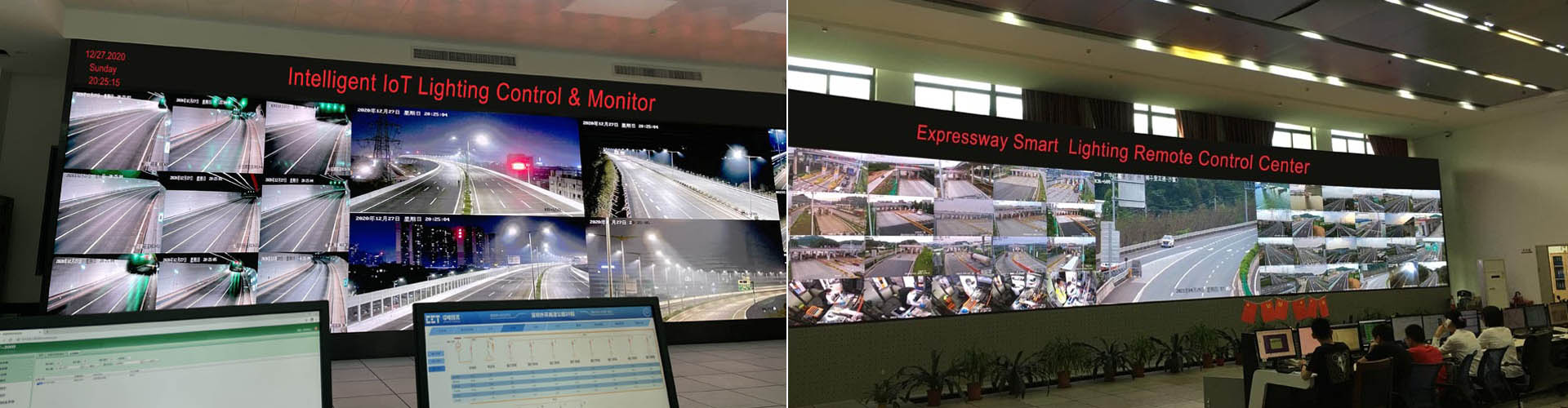
The strongest lesson from highways is not a particular lamp or protocol. It is the discipline of designing a long distributed system around predictable operation, failure boundaries, commissioning evidence and lifecycle maintenance. A sports corridor needs that same discipline, but with different users, optics, comfort requirements, sensing behavior and event modes.
| Transportation Lesson | What Transfers | What Must Be Redesigned | Acceptance Evidence |
|---|---|---|---|
| Long-distance zoning | Divide a route into manageable operating and failure zones. | Zone size, look-ahead distance and scenes around cyclists, runners and pedestrians. | Route-zone map, both-direction test and neighboring-zone response. |
| Fast field response | Measure the complete sensor-to-visible-light chain. | Detection envelope and brightness transition for human-scale mobility. | Timed walk/ride tests at approved speeds. |
| Communication resilience | Design around field conditions and defined recovery behavior. | PLC / LoRA assignment for the actual electrical and radio environment. | Channel interruption, recovery and event records. |
| Local autonomy | Keep essential operation close to the field. | Sports/event schedules, background scenes and local fallback rules. | External-network-loss test and practical restoration. |
| Environmental control | Use defined operating scenes for changing conditions. | Weather input, glare, brightness and CCT policy for the corridor. | 6000K→2700K trigger, override and photometric verification. |
| Lifecycle governance | Leave the owner with operating truth, not only equipment. | Asset identity, alarms, configuration, maintenance workflow and restore files. | Handover index, backup and owner restore demonstration. |
Transportation experience is valuable only when the engineering team separates transferable system architecture from application-specific lighting design. Highway luminance, vehicle speed, pole geometry, glare assumptions and traffic behavior are not automatically suitable for a bicycle or running route.
| Design Variable | Highway / Tunnel Context | Sports-Corridor Redesign | Procurement Check |
|---|---|---|---|
| Visual task | Motor-vehicle navigation and roadway recognition. | Cyclists, runners and pedestrians operate at lower eye heights and different speeds. | Use the applicable corridor standard and route classification. |
| Response distance | Vehicle speeds can require long advance response. | Calculate from actual permitted users, route geometry and measured latency. | Do not use nominal sensor range as accepted look-ahead distance. |
| Brightness transition | Traffic infrastructure may use strong scene changes for safety zones. | Human-scale routes require smooth transitions and comfort control. | Verify ramp rate, background level and group continuity. |
| Glare | Driver viewing geometry differs from pedestrian/cyclist viewing conditions. | Evaluate optics and mounting from actual user eye positions. | Review photometric calculation and representative site measurement. |
| CCT | Tunnel/road scenes follow their own operating policy. | Weather-responsive CCT must fit local climate and corridor comfort. | Define normal and adverse-weather scenes before SAT. |
| Event mode | Traffic operations differ from races, training and community events. | Provide authorized event scenes with clear start/end authority. | Test event mode and controlled return to automatic operation. |
Highway engineering teaches that long linear infrastructure becomes manageable when it is divided into zones with clear boundaries. In a sports corridor, those boundaries should follow geometry, power, communications, user behavior, event areas and maintenance access rather than simply equal distances.
A route-zone drawing should show pole addresses, sensor coverage, forward-lighting groups, feeder boundaries, gateway responsibility, PLC/LoRA paths, normal and event scenes, weather policy, alarms and acceptance points. This one drawing becomes the shared reference for the consultant, EPC, control supplier and owner.
| Zone Type | Sports-Corridor Concern | Transferred Infrastructure Method | Project-Specific Redesign |
|---|---|---|---|
| Straight low-use section | Energy saving without dark gaps. | Coordinated zone control and scheduled background scene. | Slow-user detection, smooth rise/fall and both-direction continuity. |
| Blind bend / crest | Late visual preparation. | Advance detection and overlapping zones. | Move sensor upstream of visibility constraint and verify ride-through. |
| Steep descent | Shorter response window. | Measured end-to-end response budget. | Use approved route speed, geometry and actual dimming rise time. |
| Entrance / crossing | Side-entry users and conflicting movement. | Priority scene and event logging. | Cross-path sensing or radar-video where justified. |
| Event area | Dense continuous occupancy. | Stable operating mode with authorized override. | Race/training scene, occupancy refresh and controlled restoration. |
| Maintenance gate | Service vehicles and stationary work. | Maintenance scene and operator authority. | Longer hold time, manual priority and restoration record. |
A highway driver and a cyclist both need the route ahead to be readable before entering it, but the control envelope is different. For sports corridors, the system should detect a valid user early enough to raise a coordinated forward zone, maintain that zone while valid occupancy continues, and return gradually to the approved background level after the clear period.
Radar, motion or selected fused sensing should be positioned around the route geometry rather than only around convenient pole locations.
CH-800 or local group logic can activate several mapped luminaires ahead so the user does not ride into a dark section waiting for the next pole to react.
Repeated valid detections refresh occupancy. Closely spaced cyclists should not cause the route to oscillate between high and low scenes.
After the final valid event, the zone follows the approved hold time and transition curve back to the background scene.
Highway detection is mainly vehicle oriented. A sports and mobility corridor may need to recognize pedestrians, individual cyclists, groups, motorcycles and authorized maintenance vehicles. Slow movement, stopping, approach angle and dense occupancy therefore matter as much as the highest approved test speed.
| User / Condition | Main Detection Risk | Control Response | SAT Requirement |
|---|---|---|---|
| Pedestrian | Slow movement or brief stops can fall below an aggressive filter. | Keep slow-user settings inside the approved envelope. | Walk, stop briefly and restart through representative zones. |
| Single cyclist | Late trigger at bend or gradient. | Activate mapped route ahead before entry. | Ride both directions at representative speeds. |
| Dense cycling group | Repeated events can cause scene instability. | Refresh occupancy while valid users continue. | Sustained group passage without premature dimming. |
| Motorcycle | Profile and approach behavior differ from cars. | Validate the actual permitted target rather than infer from car detection. | Representative motorcycle pass where permitted. |
| Service vehicle | Higher approved access speed can reduce response time. | Use project-defined service mode and look-ahead distance. | Vehicle trial at owner-approved service speed. |
| Blind bend / descent | Line-of-sight reduces useful detection time. | Move sensing upstream and overlap zones. | Timed approach and complete ride-through. |
Long sports corridors can cross new electrical infrastructure, old urban sections, open terrain and utility-dense areas. Highway-scale thinking avoids forcing one communication method across every condition. PLC can be effective where the power-line topology is organized and suitable; LoRA can be practical where the electrical route is irregular or a wireless field path is preferred.
| Field Condition | PLC | LoRA | STSYSTEMPLC Hybrid PLC & LoRA |
|---|---|---|---|
| New organized electrical section | Strong candidate where line conditions are suitable. | Available with radio planning. | PLC can be primary while LoRA provides an alternate route where the supplied design requires it. |
| Old / electrically complex section | Requires actual line-quality validation. | Avoids dependence on the power conductor as the data path. | LoRA can take priority while suitable zones continue to use PLC. |
| Mixed long corridor | One field family must cross every feeder condition. | One wireless family must cross every radio condition. | Communication can be assigned zone by zone after electrical and radio review. |
| Channel interruption | Single field communication family. | Single field communication family. | Where dual-channel operation is supplied, PLC→LoRA and LoRA→PLC recovery can be acceptance-tested. |
| Outside-network loss | Depends on local controller architecture. | Depends on local controller architecture. | CH-800 local rules separate essential field behavior from continuous cloud connectivity. |
A transportation-grade system distinguishes remote management from essential local operation. Where configured, CH-800 can retain approved schedules, route scenes and local rules so basic field behavior does not require every command to travel to a remote cloud service and back.
| Failure Event | What Is Lost | Required Local Behavior | Acceptance Test |
|---|---|---|---|
| Internet / WAN loss | Remote cloud communication. | Approved local schedules and scenes continue within the defined scope. | Disconnect upstream connection and observe field operation. |
| Cloud service unavailable | Central remote service. | Local control remains within the approved operating boundary. | Simulate service loss and review retained records. |
| PLC path interrupted | One field communication route. | Affected zone follows approved alternate/safe behavior; unaffected zones continue where topology allows. | Interrupt representative PLC path and record recovery. |
| LoRA path interrupted | One wireless field route. | Affected zone follows approved alternate/safe behavior; unaffected zones continue where topology allows. | Interrupt representative LoRA path and record recovery. |
| Gateway fault | Local decision point. | Affected boundary moves to agreed safe state and can be restored from approved backup. | Controlled failure plus practical restore. |
| Power loss | Electrical supply to field equipment. | Communication redundancy cannot replace missing power. | Test according to the project power / battery architecture. |
The first transfer question is whether the supplier has experience with genuinely long distributed lighting infrastructure. The 93KM Shenzhen Outer Ring Expressway reference supports review of corridor-scale field control, distributed devices, communication topology, commissioning and operating governance.
93KM Shenzhen Outer Ring Expressway: full-width engineering evidence for large-scale road and tunnel lighting control. For a sports corridor, transfer the long-distance architecture, communication and commissioning discipline—not highway-specific brightness or traffic assumptions.
The second transfer question is whether sensing has been connected to coordinated field-lighting response in real infrastructure. The BANYIN reference supports review of that engineering method while leaving bicycle, pedestrian, motorcycle and service-vehicle acceptance to the new corridor.
BANYIN Freeway: sensor-related coordinated field-lighting reference. The new sports corridor should independently verify its user classes, both directions, bends, gradients, group occupancy, nuisance conditions, look-ahead zones and response timing.
Tunnel engineering demonstrates the value of governed lighting scenes that respond to defined operating conditions. For a sports corridor, that discipline can be applied to weather-responsive CCT: an approved normal scene around 6000K and a selected warm-white scene around 2700K for fog, snow, rain or dust where the project optics and site tests support it.
The transfer is the control discipline—not the assumption that one CCT automatically improves every weather condition. Weather input, brightness, CCT, delay/hysteresis, manual override, sensor-fault fallback and event record should be treated as one acceptance chain.
Automatic Dual-CCT reference: 6000K normal scene ↔ 2700K selected adverse-weather scene. Verify the supplied luminaire hardware, weather-input method, transition logic, brightness and measured photometric result for the actual corridor.
A long sports corridor may pass through remote terrain where dedicated cabling becomes expensive, while other sections may already have stable grid infrastructure. The transportation lesson is to treat power as a system boundary. The sports-corridor redesign is to compare grid, pure solar and Hybrid Solar-Grid against the actual route rather than choose one power model for marketing simplicity.
| Power Model | Where It Can Fit | Engineering Responsibility | Owner Question |
|---|---|---|---|
| Grid | Sections with stable supply and practical electrical infrastructure. | Cable distance, voltage drop, protection, outage behavior and energy cost. | What is the lifecycle cost of extending and maintaining the route? |
| Pure Solar | Remote sections where grid extension is difficult. | Solar resource, autonomy days, battery aging, panel condition and seasonal performance. | What happens after several poor-generation days? |
| Hybrid Solar-Grid | Weak-grid or resilience-focused sections where both sources are available. | Priority rules, battery sizing, charging strategy, tariff logic and outage scene. | Can resilience improve without oversized batteries or dependence on one source? |
The useful smart-city transfer is not “more dashboard.” It is the ability to understand the corridor after handover: which device belongs to which route zone, why a scene changed, which communication path is active, which alarm remains open, what configuration was accepted and how the system can be restored after replacement.
| Data Layer | Owner Need | Delivered Evidence |
|---|---|---|
| Asset identity | Know the exact gateway, controller, sensor, pole and zone. | Asset export, route map and approved naming convention. |
| Operating history | Understand schedules, scene changes, commands and alarms. | Timestamped records according to contracted retention. |
| Communication state | Separate power, PLC, LoRA, cellular and upstream-network problems. | Topology, channel status and representative recovery records. |
| Energy record | Compare operating scenes and identify abnormal consumption. | Energy data within the supplied metering boundary. |
| Configuration | Know which rules and versions were accepted. | Configuration baseline, backup and controlled-change record. |
| Maintenance closure | Trace fault from alarm to restoration. | Alarm dictionary, work record and closure evidence. |
Transportation references are powerful only when claims are controlled. A completed highway project can support long-distance engineering capability; a product datasheet can support a device capability; a new sports-corridor scene remains a design proposal until it is accepted on the new route.
| Evidence Grade | Meaning | Typical Support | Correct Use |
|---|---|---|---|
| A — Project verified | The stated function and scope are supported by identifiable project evidence. | Acceptance record, approved drawing, test report, delivery record or owner-confirmed reference. | State the verified scope and do not extend it to unrelated functions. |
| B — Product verified | A product capability is supported by current technical evidence. | Datasheet, certificate, laboratory report or witnessed FAT. | State model, configuration and limits. |
| C — Design proposal | A technically reasoned solution is proposed for the new corridor. | Calculation, coverage plot, control narrative and interface schedule. | Use proposed / designed to / subject to SAT. |
| D — Validation required | An input or outcome is still uncertain. | Assumption register with validation method and owner. | Do not present it as achieved performance. |
Global infrastructure buyers may evaluate Siemens, Cisco, Signify/Philips, Schréder, Schneider Electric, ABB, Telensa, Tvilight, Itron, Dimonoff and other established suppliers. Their starting points differ across infrastructure automation, networking, professional lighting and connected-lighting management. The useful comparison is therefore the exact offered corridor architecture, not brand size.
| Supplier | Typical Infrastructure Position | What the Corridor Buyer Should Confirm | Acceptance / Lifecycle Focus |
|---|---|---|---|
| Siemens | Infrastructure automation and electrification. | Confirm the exact lighting-control package, field devices, communications and interfaces included in the offered project scope. | Review FAT/SAT, data ownership, configuration responsibility and long-term support boundary. |
| Cisco | Networking and connected-infrastructure architecture. | Confirm how the network architecture integrates with lamp-level controllers, sensors, gateways and the lighting application layer. | Verify network availability, cybersecurity boundary, edge behavior and responsibilities during upstream-service loss. |
| Signify / Philips | Professional lighting and connected-lighting platforms. | Confirm the proposed luminaire, controller, sensor, communication and platform combination for the actual corridor. | Review scene control, device lifecycle, local fallback, platform records and project-specific FAT/SAT. |
| Schréder | Professional outdoor lighting and connected-lighting platforms. | Confirm supplied field architecture, communications, sensing scope, interfaces and corridor-specific control logic. | Review commissioning, local operating behavior, asset records and handover responsibilities. |
| Schneider Electric | Energy management and infrastructure automation. | Confirm the boundary between electrical distribution, automation and lamp-level lighting control. | Verify power-system interfaces, controller autonomy, records and responsibility across the operating chain. |
| ABB | Electrification and automation. | Confirm field-lighting devices, sensor integration, communication method and control scope proposed for the corridor. | Review interface ownership, commissioning tests, configuration control and lifecycle support. |
| Telensa | Connected street-lighting network and central management. | Confirm project-specific field topology, route-zone behavior, sensing integration and recovery method. | Verify local operating boundary, communications recovery, data access and acceptance evidence. |
| Tvilight | Connected outdoor-lighting controls and smart-lighting management. | Confirm communication topology, sensor-to-light logic, local control and corridor integration. | Review response tests, failure behavior, configuration ownership and handover files. |
| Itron | Connected street-lighting and smart-city network management. | Confirm field-control scope, network architecture, interfaces and route-specific operating logic. | Verify network recovery, asset data, owner access, FAT/SAT and lifecycle responsibilities. |
| Dimonoff | Connected-lighting and smart-city control. | Confirm field devices, communications, sensing integration, local autonomy and application boundary. | Review alarm records, configuration, owner data, recovery tests and long-term support scope. |
| STSYSTEMPLC | Lighting-control-focused architecture: CH-800 gateway + lamp-level controllers + Hybrid PLC & LoRA + CAT-1/NB-IoT options + sensors + IoT Lighting Platform. | PLC, LoRA or Hybrid PLC & LoRA can be assigned by route condition. Motion, radar-video, ambient-light and weather inputs can map to route zones, light-ahead groups, local fallback and approved 6000K → 2700K scenes. | Route-zone tests, channel interruption, offline operation, sensor response, CCT scenes, alarms, asset exports, configuration backups and practical restore can be defined as FAT/SAT and handover items. |
Transportation references become useful only when the procurement team connects each project to a specific engineering question. The evidence below supports review of long-distance deployment, distributed control, complex infrastructure integration and sensor-related lighting experience. The new sports corridor still requires its own project-specific design and acceptance.
Long-distance smart road and tunnel lighting reference relevant to corridor-scale control, distributed field devices, communication topology and operating governance.
Large distributed deployment with approximately 28,000 terminals, relevant to gateway/node organization and field-device scale.
Cross-sea infrastructure reference where reliability, integration and lifecycle engineering are central project responsibilities.
Major bridge-tunnel infrastructure reference supporting review of complex transportation-lighting engineering capability.
Accumulated linear-infrastructure deployment experience relevant to zoning, communication, sensor integration and long-term maintenance thinking.
Sensor-related coordinated field-lighting reference relevant to adaptive-control method and sensor-to-scene engineering evidence.
Past projects demonstrate engineering experience; they do not replace acceptance of the new route. The transfer becomes credible when every sports-corridor function is converted into a factory test, a site test and an owner-held record.
| Acceptance Item | FAT Before Delivery | SAT on the Corridor | Owner-Held Evidence |
|---|---|---|---|
| Asset identity | Map sensors, poles, controllers, cabinets and gateways. | Check physical assets against route/platform records. | Asset list, route map and zone table. |
| Mixed users | Simulate supported target inputs and scene logic. | Test pedestrians, cyclists, motorcycles and service vehicles where applicable. | Target-pass record and installed settings. |
| Both directions | Simulate neighboring zones for both travel directions. | Ride/walk representative sections in both directions. | Scene sequence and response timing. |
| Bend / gradient | Prepare overlap and advance-lighting rules. | Traverse difficult approaches at approved speeds. | Coverage and route-test record. |
| Dense groups | Verify repeated-trigger and hold logic. | Test sustained groups and simultaneous occupancy. | Detection history and no-premature-dimming result. |
| PLC path | Verify communication and command behavior. | Interrupt representative PLC path where testable. | Line-quality, command and recovery record. |
| LoRA path | Verify communication and command behavior. | Interrupt representative LoRA path where testable. | Coverage, command and recovery record. |
| Hybrid fallback | Verify both supplied paths and transfer logic. | Interrupt each supplied path on representative zones. | Transfer timing, event log and restoration record. |
| Outside-network loss | Load local schedules and fallback rules. | Disconnect external link and observe field operation. | Offline result, retained logs and restoration record. |
| Weather / Dual CCT | Check 6000K→2700K rule and manual override. | Verify trigger, scene, recovery and measured output. | CCT scene file and weather-input test. |
| Photometric scenes | Validate luminaire configuration and scene limits. | Measure relevant light levels and uniformity. | Photometric files and site measurement report. |
| Alarm closure | Prepare alarm dictionary and maintenance states. | Simulate fault through dispatch, repair and closure. | Alarm log and maintenance closure. |
| Configuration restore | Prepare approved backups. | Restore representative gateway/controller configuration. | Backup, restore record and version baseline. |
| Owner handover | Prepare accounts, exports, interface notes and spare plan. | Confirm owner access and practical restore. | Handover index and signed acceptance files. |
The mature infrastructure lesson is that commissioning is only the beginning. A corridor can remain physically illuminated while its operating knowledge slowly disappears through undocumented replacements, unknown configurations, unowned alarms and staff turnover. Lifecycle governance protects the owner from that decline.
Commissioning truth: route-zone map, asset baseline, scene logic, communication topology and FAT/SAT evidence establish the operating baseline.
Maintenance continuity: alarm history, replacement records, configuration backups and controlled changes preserve operating knowledge.
Lifecycle resilience: exportable records, documented interfaces, staged upgrades and practical restoration reduce dependence on one engineer or project phase.
| Procurement Question | Weak Answer Pattern | Evidence-Based Answer |
|---|---|---|
| How does highway experience help this corridor? | “We have many large projects.” | Identify the transferable architecture, reference evidence and functions that still require new-route SAT. |
| What should not be copied from highways? | No distinction is made. | State that sports-corridor optics, user speeds, sensing envelope, comfort and event scenes require new design. |
| What continues without internet? | “The system is offline capable.” | Name the local controller, stored rules, affected boundary, retained records and restoration behavior. |
| Why Hybrid PLC & LoRA? | “Two technologies are better than one.” | Show which zones use which path, why, how interruption is detected and what recovery is accepted. |
| How is weather CCT controlled? | “2700K is better in fog.” | Define weather input, CCT/brightness scenes, optics, delay/hysteresis, manual override and site test. |
| What does the owner retain? | “Cloud platform included.” | Provide asset export, route map, alarms, configuration backup, interface notes, FAT/SAT and restore procedure. |
| How are suppliers compared? | “Our brand is better.” | Use one requirement matrix and require each bidder to declare scope, interfaces, exclusions and acceptance evidence. |
Transportation-grade delivery depends on explicit responsibility. The owner, consultant, EPC, electrical contractor, lighting/control supplier and operations team should know who owns each design input, field interface, test and lifecycle record before commissioning begins.
| Responsibility | Owner / Consultant | EPC / Installer | STSYSTEMPLC / Control Scope | Acceptance Boundary |
|---|---|---|---|---|
| Operating policy | Approve users, speeds, scenes, event rules and weather policy. | Implement approved field arrangement. | Configure agreed control logic and provide architecture support. | Approved control narrative and scene matrix. |
| Electrical infrastructure | Approve standards and power strategy. | Design/install feeders, protection, earthing and site wiring. | Confirm controller/gateway electrical interface requirements. | Electrical tests and interface verification. |
| Communication | Approve availability and cybersecurity requirements. | Provide required cabling, mounting and field conditions. | Define PLC/LoRA/cellular architecture within supplied scope. | Coverage / line-quality and interruption tests. |
| Sensors | Approve target list and privacy boundary. | Install at approved position and height. | Configure supported sensor inputs and route-zone mapping. | Target-pass, nuisance and lost-input tests. |
| Platform / data | Approve users, retention, ownership and integration boundary. | Provide required network access where contracted. | Configure platform, roles, exports and agreed interfaces. | User-role, export, alarm and integration tests. |
| Handover | Accept final evidence and operating responsibility. | Submit as-built installation records. | Provide agreed configuration baseline, backups and technical files. | Signed handover index and restore demonstration. |
The value of highway and tunnel experience is not that a sports corridor should look or operate like a highway. The value is that long-distance infrastructure has already taught difficult lessons about distributed assets, failure recovery, communication boundaries, commissioning and maintenance responsibility.
When those lessons are combined with human-centered photometrics, adaptive light-ahead sensing, weather-responsive scenes and sports-event logic, the result is a corridor designed as manageable public infrastructure rather than a collection of remotely controlled luminaires.
Provide route geometry, user classes, pole spacing, power architecture, communication conditions, event requirements, weather exposure and owner acceptance rules. STSYSTEMPLC can translate transportation-grade engineering methods into a project-specific sports-corridor architecture and FAT/SAT framework.
Discuss the Corridor ProjectDownload Technical PDFs
Adresse : F4,Bldg A, Hanzhong Industrial Park, No.67, North of Xinsha Ave, Xin Tang, Zeng Cheng, Guang Zhou, China
Tél : +86 20 8278 0427
E-mail : info@stsystemplc.com
E-mail : morrison426@163.com